
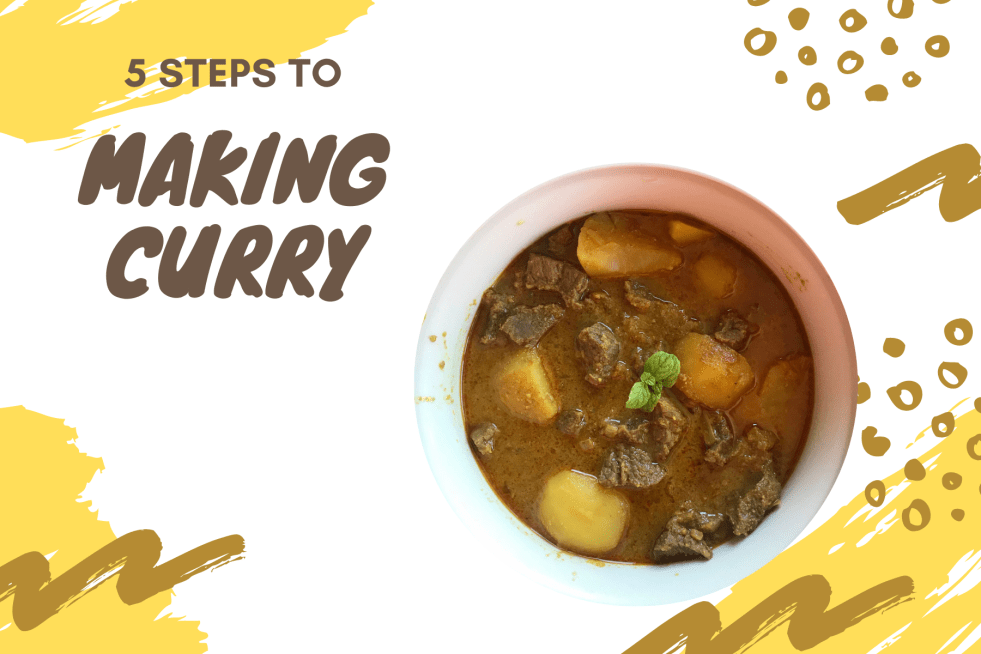
Curry is one of those dishes I make on a regular basis and almost always when we serve Indian food for guests. And over the years I have had different people ask me for tips on making their curry as good as mine.
In my opinion, making curry is not that complicated….ONCE you understand some of the basics. And so here I will break down the basics to help you get started on making your own curry.
First, let me share a couple of anecdotes from my own journey in learning the art of making curry.
I really didn’t do much any cooking at all until my early twenties when I found myself in a situation having to cook for myself and occasionally for an elderly sweet lady who used to be a missionary in India and who was letting me lodge in her basement. When she tasted my very first curry dish, she said my curry tasted like tomato soup. 😒
Fast forward a few years. By this time I had started doing more cooking and was starting to gain some confidence in making curry that I decided to cook for some of my relatives. After taking one bite of my curry, my uncle very candidly told me, “you could only get better from here” (referring to my cooking of course). Hey, I was making progress….my curry status moved from soup to curry-that-could-be-improved.
I am sharing this so that you can take heart too as you embark on your curry making journey no matter where you are at 😏
Lets get started.
Start with the Pot
You want to start with the right pot that is thick bottomed and big enough to hold the amount of curry you want to make.
If you are planning to cook red meat like beef or lamb, you should consider using an Instant Pot or Pressure Cooker so the meat can reach the right level of tenderness (you really do not want any tough or under-cooked meat in curry).
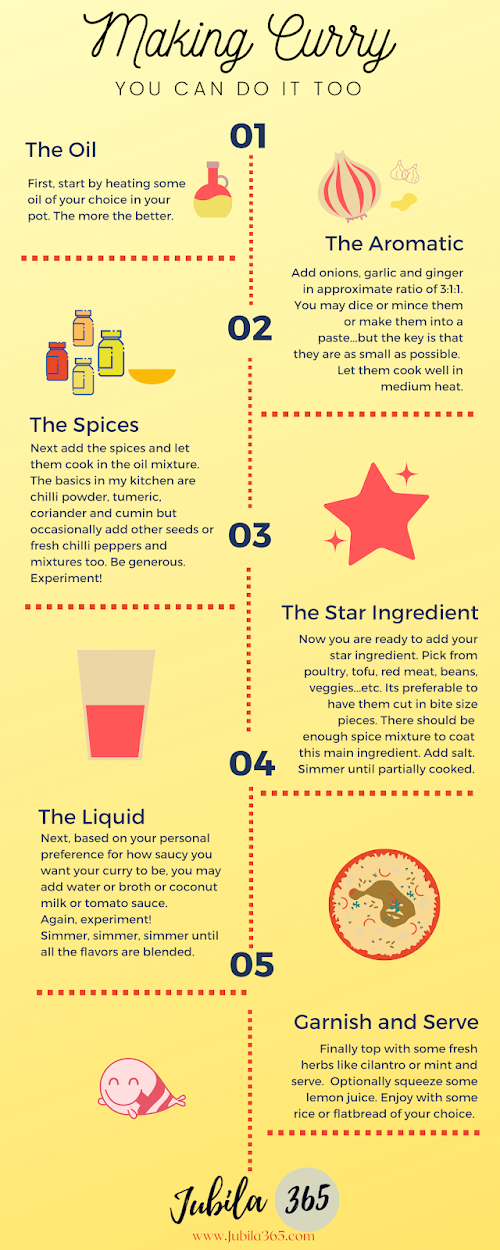
The Oil
You always start by heating up some oil.
The type of oil is really your personal preference. I only have Olive Oil and Coconut Oil in my pantry and so I go with one of those.
The quantity is important as well. You really need the oil in which the spices can cook well.
I do not recommend substituting broth for oil. While broth may work as an oil substitute for some dishes, it doesn’t work well to get a good curry flavor.
The Aromatic
Onions
After you have allowed the oil to heat a little, you want to add a generous amount of diced onions. I usually make enough to serve 6-8 and cut up a whole medium sized onion. The type of onion – white, yellow, brown, red – doesn’t really matter. And you want to dice them as small as you can. You could also chop them in a food processor if cutting onions is not really your thing. I usually dice them after I added the oil to the pot waiting for it to heat up.
Garlic and Ginger
After the onions have cooked for a little and start to get translucent, I add a couple of spoonfuls of ginger-garlic paste. You can find this paste in most Indian grocery stores but I usually blend my own (just equal amounts of ginger root and garlic cloves blended with enough water to make the paste). This stores well in refrigerator for weeks and months.
If you are not sure if you want a whole jar, you can just crush some fresh ginger root and garlic together; just enough for a single time use.
IMPORTANT: Under no circumstances use any of the onion/ginger/garlic powders. you want to use the fresh ingredients. These add the flavor to any curry dish and also contribute to the sauce you want in your dish.
The Spices
Now that you have let the oil and the onion, ginger, garlic, it is time to add one of the key ingredients: the spices. After all what is a curry without the spices 😊
❗An important clarification: There is no such thing as “curry spice”. Curry refers to a blend of individual spices to give an unique flavor.
How do I know which spices to use?
Each cuisine has its own unique blend of spices they use for different types of curries. For example, the Japanese Golden Curry spice blend is very different than the Thai Red Curry paste. And with the Indian cuisine, depending on which brand you pick, the pre-mixed curry powders will each have its own unique flavor.
If you are beginner, and not sure where to start, go ahead and pick a pre-mixed curry paste or powder. But be sure to read the ingredient label to see how much chilli powder it contains so you have feel for how hot the spice mix will be.
But here are some spices I keep handy and use most commonly in my cooking:
- Red Chilli Powder: This is what adds the “hot” flavor you typically taste in curries. When you hear someone say the curry is “spicy”, they are referring to the level of heat contributed by this spice. Depending on who I am cooking for, I increase or reduce the quantity of how much I use so I can control the spice level.
- Tumeric Powder: This is the spice that contributes to the yellow color of the curry dish. It adds nutritional value as well an aromatic flavor that makes this a must-have for any curry dish.
- Coriander, Cumin, Fennel Powders: These are other 3 spice jars that I reach for every time I am making curries and use them in varying amounts depending on what I am “feeling” at the moment. (Yes, cooking is an art form where you get to experiment with the flavors). I lean more towards coriander in most of my cooking and usually tend to add add twice as much of coriander than the cumin or fennel.
All three of these spices also come in seed form and can be roasted and processed to create your own powder but I take the shortcut and just buy the powdered form.
- Garam Masala: Okay, so technically this is not a standalone spice but an unique blend of spices that create an unique flavor that I like to use when I am cooking chickpeas or other legumes. You can find this in powder form in most Indian grocery stores.
- Cinnamon/Cardamon/Cloves: These are other very aromatic spices with very strong flavors. I seldom use them when I am making regular everyday curry, but every once in a while I may use them to add a little bit of extra flavor. These are purely optional. However, I like to add cinnamon powder while making beef or lamb curries.
As you are adding the spices, do not be stingy. Feel free to add them in spoonfuls (except for maybe the chill powder until you get a feel for how hot it is and you know your heat tolerance). The amount of spice you add is the difference between getting tomato soup versus tomato-based curry 😉
The Star Ingredient
Here you add the main ingredient for your curry. Chicken is a great choice as you start but if you do not eat meat, then you could add lentils or Tofu. If you want to use vegetables only, I recommend starting with Cauliflower with tomatoes. You could always toss in some sliced bell peppers too.
The key is to let it coat well in the spices and cook until it is semi tender before you move on to the next step.
The Liquid
This may be optional if you curry is already forming some gravy that you are happy with. Here are some general tips on how making your decision:
- Chicken: Chicken, especially non-breast parts, will release quite a bit of liquid. Sometimes you can just allow that sauce to thicken or you may add your choice of coconut milk or tomato sauce or broth. Do not add too much at once. You can always add more later if you want more liquid. Remember, with curry, a little bit goes a long way.
- Beef: I prefer my beef with coconut milk. But sometimes I also add diced tomatoes create a nice thick gravy base for the beef.
- Tofu: I usually use the firm kind with water squeezed out and like my Tofu dry without any liquid. But coconut milk or broth would both work if you want to create a bit of sauce.
- Vegetables: Almost all vegetables release a lot of water and you should be able to skip the liquid altogether. However I recommend adding diced tomatoes to create a nice sauce base.
- Lentils (green or brown): These soak up any liquid and so adding some water or broth is a must. For more flavor use broth of your choice.
Oh, and some curries also add yogurt for a liquid but I haven’t done it much and so really do not have much insight to offer. But feel free to experiment.
Once your have added the liquid, allow lots of time to simmer and reach the right amount of tenderness you prefer in your star ingredient.
Do not hesitate to taste often during this process 😋
The Final Touch
Now your curry is ready to serve….almost. You may squeeze some lemon juice to bring out some more flavor. Or top with some herbs as a garnish. I like to use cilantro but mint is a great choice too. These are the 2 most common herbs used in the Indian cuisine.
There you have it….what you need to know to get started with making your own curry.
Good luck and feel free to post your questions or leave a comment!

 Jubila 365
2 thoughts on “5 Steps to Making Curry”